Can AI Replace Your Job? 7 Careers at Risk by 2030
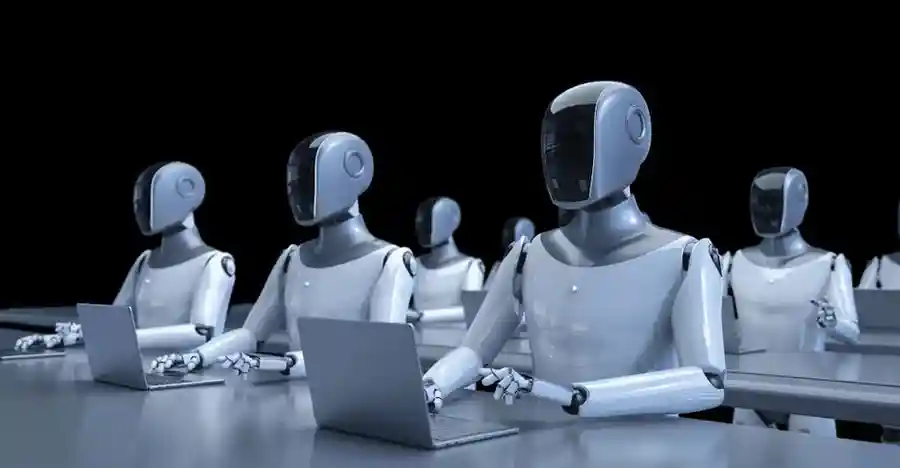
AI is an invention that is rapidly shaking the entire world of work-from simple tasks to complex data-one wherein lay many of the functions of human intelligence.
The merit of AI lies in greater productivity, which begs a question: will AI replace your job?
This article touches on 7 professions that might very well be replaced by AI by 2030, why they are so vulnerable to replacement, and what responses you may take to adapt and stay ahead.
1. Data Entry Clerks
Why at risk:
Data entry is situation where repetitive tasks such as inputting or updating information and getting back that same information to the user are involved. These tasks are now performed more easily and faster with great accuracy through AI systems and RPA (robotic process automation).
🔍 Example: AI tools such as UiPath and Automation Anywhere have been systematically doing away with manual data entry jobs in huge organizations.
Future-Proof Tip:
Shift towards data analysis or AI tool management—skills that require critical thinking, not just repetition.
2. Customer Support Representatives
Why at risk:
These advanced AI applications can handle almost unlimited user inquiries at the same time without a break.
🤖 For instance, Zendesk AI and Intercom serve customers via chatbots to respond to simple questions while routing more complex cases to human agents.
Future-Proof Tip:
Upskill in empathy-driven roles such as customer experience design or technical support that AI can’t fully replicate.
3. Telemarketers
Why at risk:
AI voice generators and natural language processing tools are already being used to make sales calls and gather customer feedback.
🗣 Example: Some companies now use AI avatars to pitch products over the phone or via video.
Future-Proof Tip:
Focus on relationship-based selling or digital marketing—fields that benefit from creativity and human interaction.
4. Proofreaders and Copy Editors
Why at risk:
Such tools include AI-based digital writing assistants like Grammarly, Hemingway, and ChatGPT, which can instantly check grammar, improve tone, and rewrite sentences.
📚 Instance: AI is used to edit everything from social media posts to formal documents.
Future-Proof Tip:
Specialize in creative writing, storytelling, or brand voice development—areas where AI still struggles.
5. Retail Cashiers
Why at risk:
They replace the traditional cashier function with self-checkout kiosks or AI point-of-sale systems to manage the payment process.
🛒 For example: Within this Amazon Go store, customers just have to use the advanced technology of computer vision, grab items and leave without coming into contact with any cashier.
Future-Proof Tip:
Consider training for inventory management, customer engagement, or logistics operations.
6. Travel Agents
Why at risk:
Revolutionizing the travel and booking arenas, AI-based engines and interfaced applications can now suggest personalized trips, compare pricing levels, and get everything booked within an instant.
🌍 For instance, Google Travel and Hopper use AI tools to predict price trends and assist users with trip planning.
Future-Proof Tip:
Shift towards luxury travel consulting or experience planning—niches where human insight still matters.
7. Manufacturing Line Workers
Why at risk:
Tasks are being increasingly automated by AI robot and machine operations in assembly lines, especially in electronics, automotive, and packaging industries.
⚙️ Example: Tesla’s Gigafactories utilize AI and robotics to enhance the production of vehicles.
Future-Proof Tip:
Train in robotics maintenance, quality control, or industrial design—roles that complement automation.
👉 Read More
FAQs
Q1: Will AI take over all jobs in the future?
No. While AI will replace some jobs, it will also create new roles in tech, management, and creative fields.
Q2: What skills should I learn to stay safe from AI disruption?
Some of the skills you would need to stay AI safe are skills centered around the human spirit like critical thinking, creativity, emotional intelligence, and tech literacy.
Q3: Are creative jobs safe from AI?
Mostly yes—for now. AI can assist with content, but it struggles with originality, humor, and emotional storytelling.
Q4: Is it possible to change jobs from one posing high risks to a safety-proof career?
Definitely not. There are plenty of affordable online courses for reskilling, such as those from Coursera, Udemy, and LinkedIn Learning.
Conclusion
Feared by many as a destroyer of jobs, AI is here to reshape them instead. With an understanding of which jobs are more vulnerable as well as the opportunities being created, one can be ahead in the game.
There is no better time to future-proof oneself and start embracing learning-for-life since in the smart-age, adaptability is the best skill to have.